Storm Damage Roofing Claims in Savannah, Coastal Georgia, and Southeast Georgia

After a major storm, getting an accurate inspection and proper documentation in place quickly protects your ability to file a roofing insurance claim with confidence.
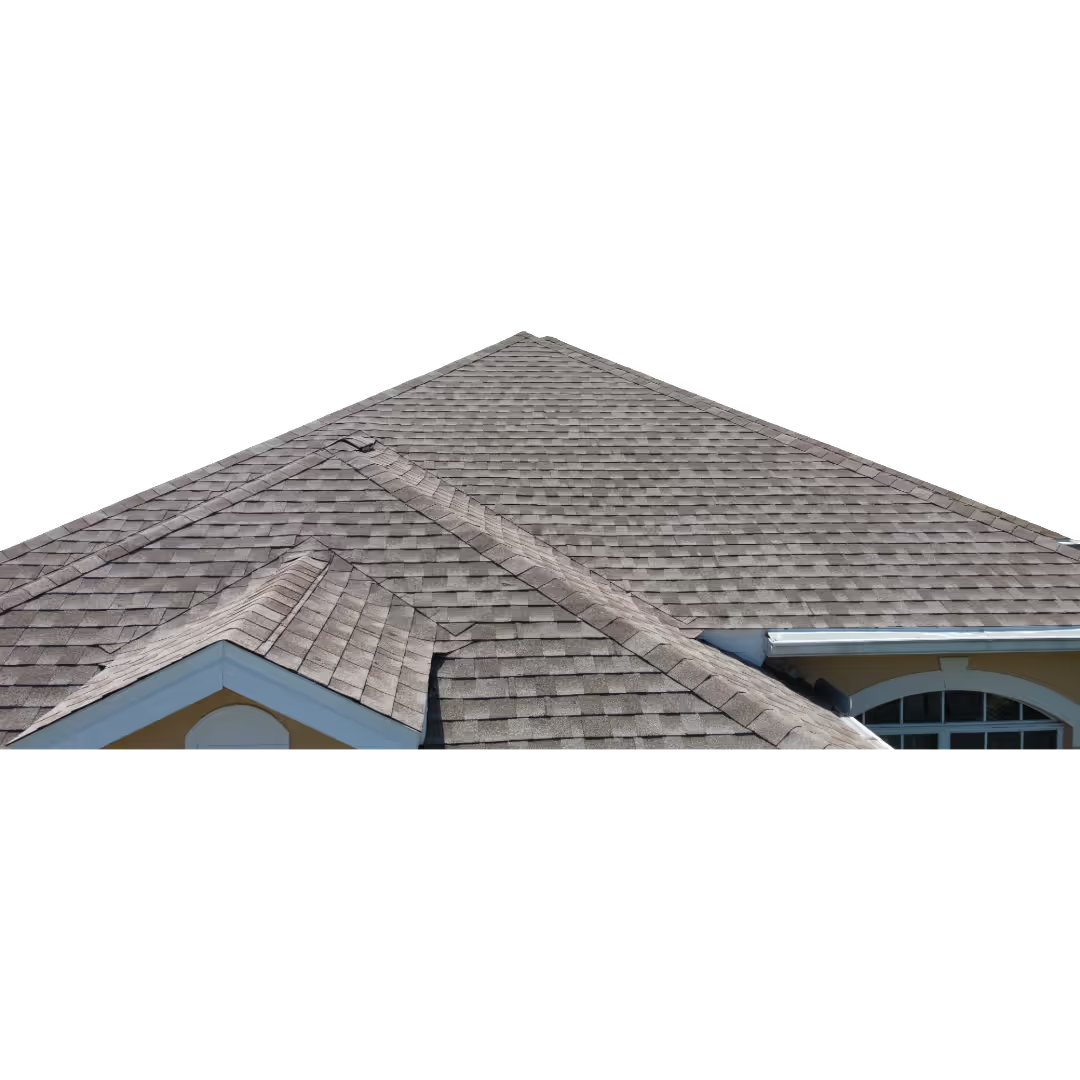
Claim Your Free Inspection

Thank you! We’ll be in touch soon.
image of office interior (for a productivity tools business)
Submission failed. Please check required fields.

Get In Contact With Georgia's 5-Star Rated Roofing Contractor

This is some text inside of a div block.
Thank you! Your submission has been received!
Oops! Something went wrong while submitting the form.

Serving Southeast Georgia With Industry Leading Roofing & Restoration Services

From Brunswick to Savannah & Pooler, and even up to Atlanta & Augusta!

Storm Damage Roofing Contractor and Insurance Claim Support in Southeast Georgia

Southeast Georgia is no stranger to damaging weather, including tropical storms, named hurricanes, severe thunderstorms with large hail, and the kind of sustained high-wind events that can lift shingles, displace flashing, and push water into structures that looked undamaged from the street. Divine Roofing & Restoration approaches storm damage work with a focus on documentation first, making sure that all wind and impact damage is photographed, measured, and recorded in a format that gives homeowners a credible and organized package to present to their insurance adjuster. Claim support is documentation-focused, and homeowners are always encouraged to review their policy terms and speak directly with their carrier throughout the process.
Book Now

Documenting, Reporting, and Restoring After Storm Damage

The steps between a storm and a restored roof involve thorough documentation, clear communication with the insurance carrier, and repair or replacement work completed to close the damage properly and meet any applicable code requirements in Southeast Georgia.

01

Post-Storm Damage Inspection and Documentation

Following a storm event, the roof and exterior are inspected for wind-lifted shingles, hail impact marks, flashing displacement, gutter damage, and any other storm-related conditions that would support a claim. All findings are photographed systematically and recorded with measurements where applicable to create an organized damage record.

02

Review of Findings With the Homeowner

Before any paperwork is filed, the homeowner is walked through what was found, what the documentation shows, and how the damage aligns with the type of weather event that occurred. This gives homeowners an accurate picture of the situation before they contact their insurer or prepare for an adjuster visit.

03

Supporting the Claims Process Through Documentation

The inspection findings, photographs, and written damage summary are prepared in a format that is useful during the adjuster review, giving the homeowner a professional record of the documented damage. Divine's role is to support the homeowner with accurate, complete information throughout the process.

04

Repair or Replacement Once the Claim Is Resolved

Once the claim decision has been made by the carrier, repair or replacement work is scheduled and completed using materials matched to the existing system or upgraded based on the approved scope. Work is completed to restore the roof to a fully watertight condition with documentation of everything performed.

Storm Damage Claim Support for Properties Across Southeast Georgia

Wind, hail, and storm damage affects all property types in the region, from residential neighborhoods to commercial buildings and multi-family properties throughout Coastal Georgia.

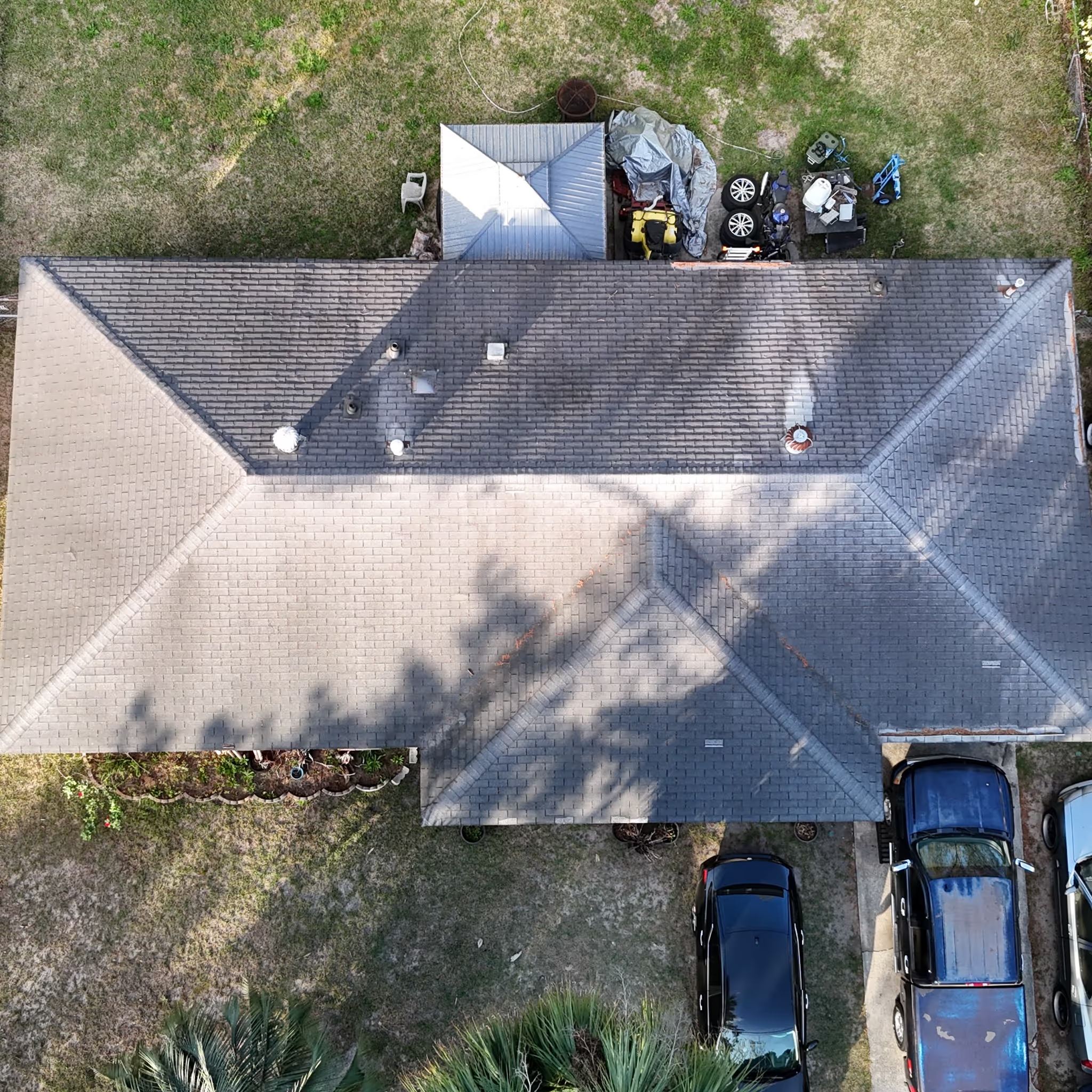
Homeowners across the Savannah metro, Pooler, Richmond Hill, and Rincon frequently deal with storm damage to asphalt shingle roofs that is not always obvious until a closer inspection is performed. Proper documentation of wind lift, granule loss, and impact marks gives homeowners the support they need when working through the claims process with their carrier.
Storm damage to multi-family buildings, apartment complexes, and rental properties involves additional considerations around tenant impact, repair timelines, and property management documentation requirements. Accurate and organized damage reports are especially important for these properties, where the cost of delays or undocumented damage can compound quickly.

Commercial buildings with large flat or low-slope roof systems accumulate storm damage differently than residential pitched roofs, and hail impact, membrane punctures, and flashing failures may not be immediately visible without a dedicated inspection. Thorough commercial storm damage documentation supports the adjuster review and helps avoid disputes over the scope of covered damage.

Don’t just take our word for it

Hear from some of our amazing customers who are building faster.
"We’ve been using Untitled to kick start every new project and can’t imagine working without it."
Candice Wu
Product Manager, Sisyphus
"Love the simplicity of the service and the prompt customer support. We can’t imagine working without it."
Mollie Hall
Web Developer, Sisyphus
"Untitled has saved us thousands of hours of work. We’re able to spin up projects in hours."
Kelly Williams
Head of Design, Layers
"Love the simplicity and the prompt customer support."
Koray Okumus
UX Designer, Circooles
"We’ve been using Untitled to kick start every new project. I can’t imagine working without it."
Lyle Kauffman
Data Engineer, Catalog
"We’ve been using Untitled to kick start every new project and can’t imagine working without it."
Candice Wu
Product Manager, Sisyphus
"Love the simplicity of the service and the prompt customer support. We can’t imagine working without it."
Mollie Hall
Web Developer, Sisyphus
"Untitled has saved us thousands of hours of work. We’re able to spin up projects in hours."
Kelly Williams
Head of Design, Layers
"Love the simplicity and the prompt customer support."
Koray Okumus
UX Designer, Circooles
"We’ve been using Untitled to kick start every new project. I can’t imagine working without it."
Lyle Kauffman
Data Engineer, Catalog
Get in touch

Connect with our experts

Contact us for premium roofing solutions. Complete the form and our team will reach out quickly.

Storm Damage and Insurance Claim Questions from Southeast Georgia Homeowners

These questions cover the most common concerns homeowners have after a storm when they are unsure whether they have a claimable loss and what steps to take first.


How do I know if my roof damage qualifies for an insurance claim?
Whether storm damage qualifies for a claim depends on your policy, your deductible, the type of event that caused the damage, and how the damage is documented. A professional inspection that identifies and records specific storm-related conditions is the most useful starting point before contacting your carrier.
How soon after a storm should I have my roof inspected?
Inspecting and documenting damage as soon as it is safe to do so is important because most insurance policies include timeframes within which a claim must be reported. Delay can also allow secondary water damage to develop, which complicates both the repair scope and the claims process.
Will filing a roof claim raise my homeowner's insurance premium?
Premium impact varies by carrier, claim history, and policy terms, and that is a question best directed to your insurance agent. What matters from a contractor standpoint is that the damage is documented accurately and completely before any filing decision is made.
Can I get repairs done before the adjuster comes out?
In most cases, waiting for the adjuster to evaluate the damage in person is preferable so that the scope is confirmed before any work removes visible evidence. If the roof is actively leaking and causing interior damage, temporary protective measures such as tarping are generally acceptable and should also be documented.
What if the adjuster's estimate is lower than the actual repair cost?
Disputes over repair scope and cost are not uncommon, and having detailed contractor documentation of the damage and a complete written estimate gives the homeowner grounds to request a re-evaluation or supplemental review. That process is handled between the homeowner and their carrier.
Does hail damage always require a full roof replacement?
Not always. The decision between repair and replacement depends on the density, size, and distribution of impact across the roof field, as well as the age and condition of the existing system. A thorough inspection and clear documentation of impact patterns helps establish what the damage actually requires rather than assuming either extreme.